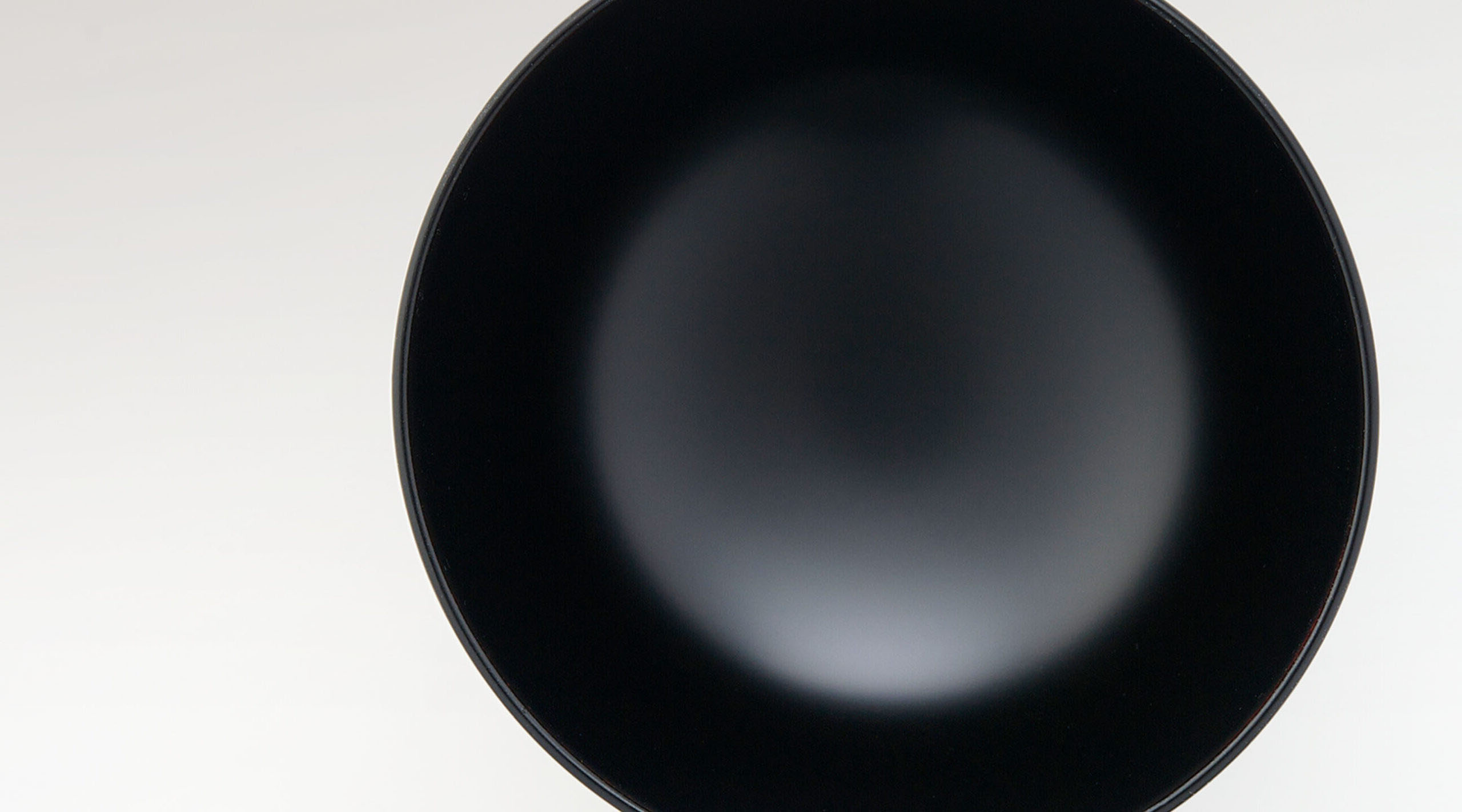
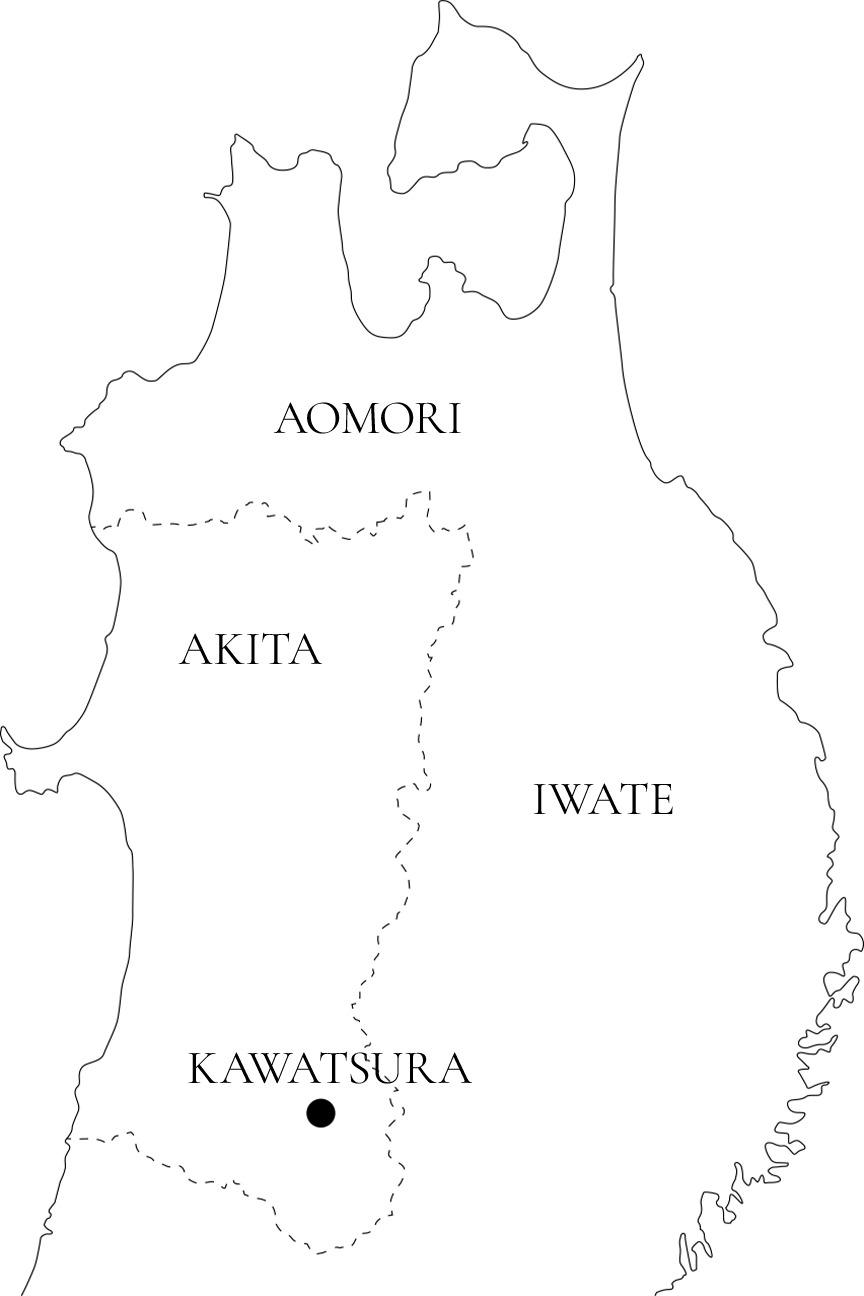
Kawatsura lacquerware has a long history. It is said that the tradition began with the lacquering of armor and sheaths for swords around 800 years ago.
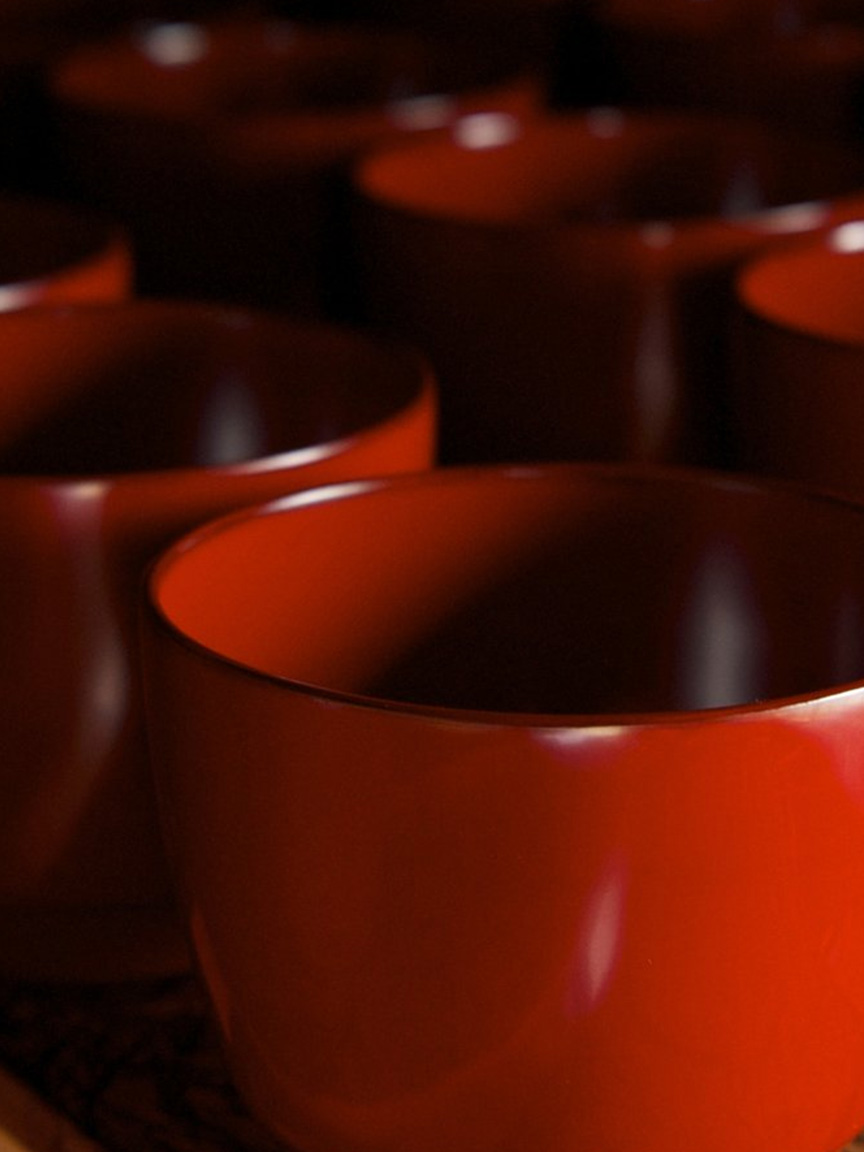
About Kawatsura Lacquerware
The end of the Edo Period saw the flourishing of lacquerware for objects such as wooden bowls, small tables, boxes for valuable and precious objects and also the luxurious chinkin and maki-e inlay decorative products. These were traded inside Japan across feudal kingdoms as well as sent overseas, providing much wealth to the sort after master craftsmen. Nowadays, although no where near what it was long ago, the tradition of lacquerware has been quietly maintained in a few select areas of Japan and is a source of income supporting the local economy in rural areas. In Kawatsura, the skills and knowledge of the art have been handed down generations of makers who are careful to protect the tradition of polite and honest manufacturing. It has been decided to make items affordable so that can be used and enjoyed in the everyday and the charm of Kawatsura wares are known and used by a wide range of customers. The characteristic warm colors of Kawatsura lacquer, unlike regular tableware, grows in luster and color with its continued use. A particular trait of Kawatsura ware is also the thickness of the final lacquering making a robust product. Born from simplicity, crafted from wood and then coated with
sap from the Sumac tree, as consumers we can have faith that this 1s a natural product embodying a natural beauty as well as durability and antibacterial qualities. The ultimate charm of lacquerware is the ability to refresh your wares with subsequent lacquering, creating objects that can be used for a lifetime and passed onto future generations. We can feel the joy of using a quality and beautiful product and then passing this product on if we so wish. This is how we think of our Kawatsura lacquerware, a philosophy of product design for our everyday living.
The end of the Edo Period saw the flourishing of lacquerware for objects such as wooden bowls, small tables, boxes for valuable and precious objects and also the luxurious chinkin and maki-e inlay decorative products. These were traded inside Japan across feudal kingdoms as well as sent overseas, providing much wealth to the sort after master craftsmen. Nowadays, although no where near what it was long ago, the tradition of lacquerware has been quietly maintained in a few select areas of Japan and is a source of income supporting the local economy in rural areas. In Kawatsura, the skills and knowledge of the art have been handed down generations of makers who are careful to protect the tradition of polite and honest manufacturing. It has been decided to make items affordable so that can be used and enjoyed in the everyday and the charm of Kawatsura wares are known and used by a wide range of customers. The characteristic warm colors of Kawatsura lacquer, unlike regular tableware, grows in luster and color with its continued use. A particular trait of Kawatsura ware is also the thickness of the final lacquering making a robust product. Born from simplicity, crafted from wood and then coated with
sap from the Sumac tree, as consumers we can have faith that this 1s a natural product embodying a natural beauty as well as durability and antibacterial qualities. The ultimate charm of lacquerware is the ability to refresh your wares with subsequent lacquering, creating objects that can be used for a lifetime and passed onto future generations. We can feel the joy of using a quality and beautiful product and then passing this product on if we so wish. This is how we think of our Kawatsura lacquerware, a philosophy of product design for our everyday living.

Jujiro’s Three point Philosophy
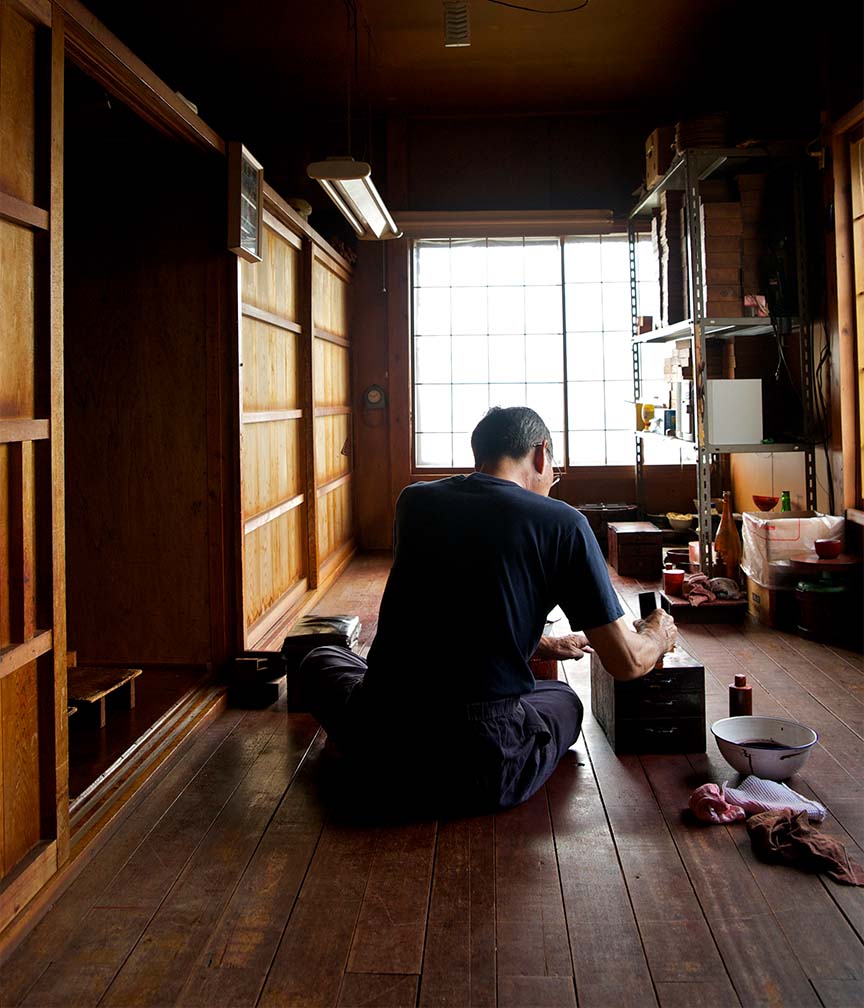
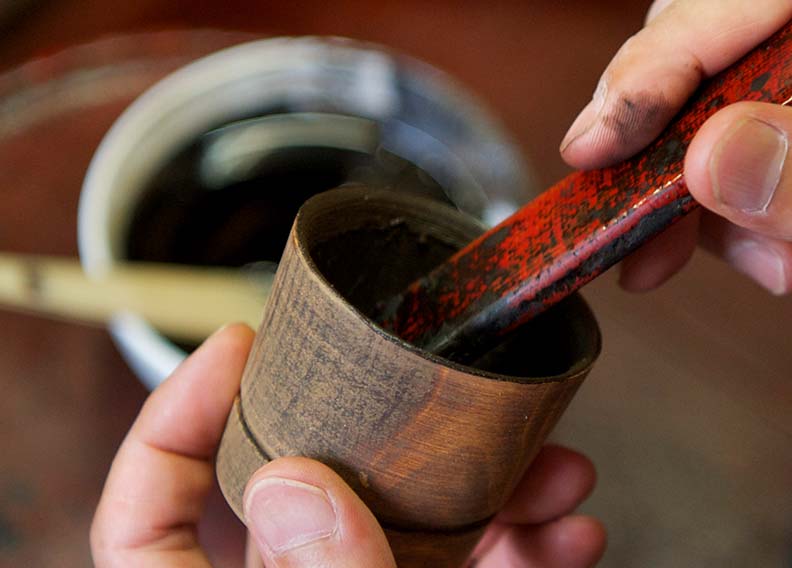
learning from the hand of the master, everlasting product quality
We respect the hand craftsmanship and use it as a tool for learning to make exquisite products that can be used time and time again over a lifetime and be loved by our customers.
In the making of lacquerware we can support and retain the traditional Japanese
food culture for it to be enjoyed by generations beyond us
To be able to enjoy the food by finding pleasure in the wares in which it is presented has always been a key component of Japanese food culture. We wish to safehold this tradition and pass it onto future generations. To make products that can communicate this connection, that are beautiful and of fine quality as well as serve a simple function is what we strive for in our craftsmanship.
Be thankful to the bounty of nature in which we thrive together
Our Kawatsura lacquerware is an one hundred percent natural product with all of our materials sourced from within Japan. The sap we use for the lacquer is taken from trees that have reached at least 15 years of age. Our entire process uses only raw naturally produced materials so we cannot continue with our production without respecting, protecting and living alongside nature. As a gift from nature, we carefully use these raw materials and we are careful not to allow any waste. In our crafting we continuously give thanks for the blessings Mother Nature has provided and hope our finished product can reflect her bounty.
Making Process
The hand crafting of bare wood
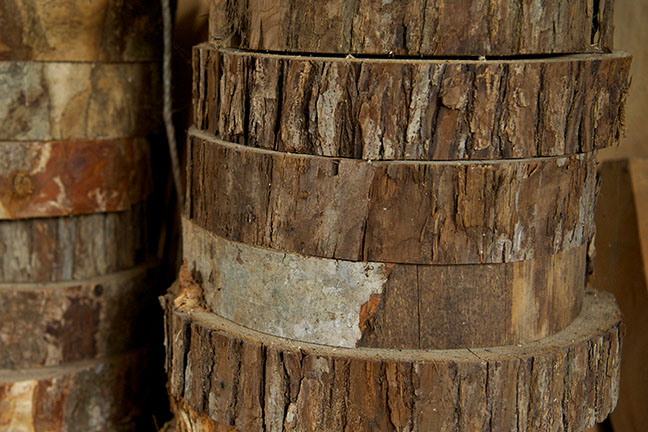
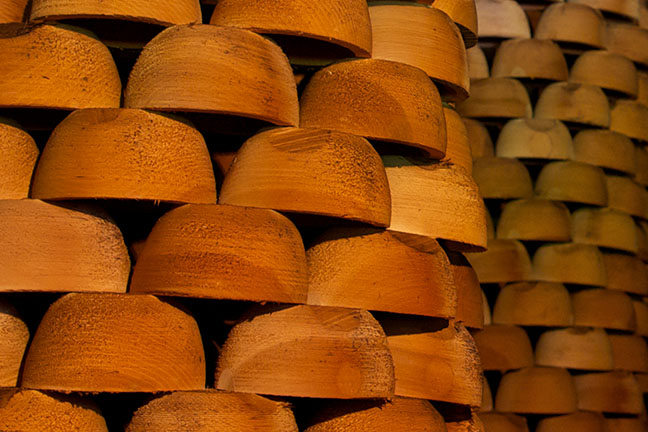
As a designated traditional from of Japan, Kawatsura Lacquerware production begins with the felling of a tree. Once a tree in our woodland has reached a certain size it is felled. There are two options for slicing the tree for wood so called sideways and vertical. Traditionally our lacquerware uses the sideways cutting where the tree is sliced along the length of the grain. The wood when cut in this way has long been known to have a natural robustness, a fact recently proven when a study conducted showed that products made from this cutting technique have double the strength of those cut in the vertical technique. We then smoke dry the log at a low temperature over many hours to allow for water evaporation. As water evaporates the log shrinks and hardens and this smoking process also acts as a natural insecticide. The dried log is hard and because of this hardness the craftsman is able to manipulate the log into the rough shape of the final product on a wheel, with a saw and a lathe.
-
Our wood
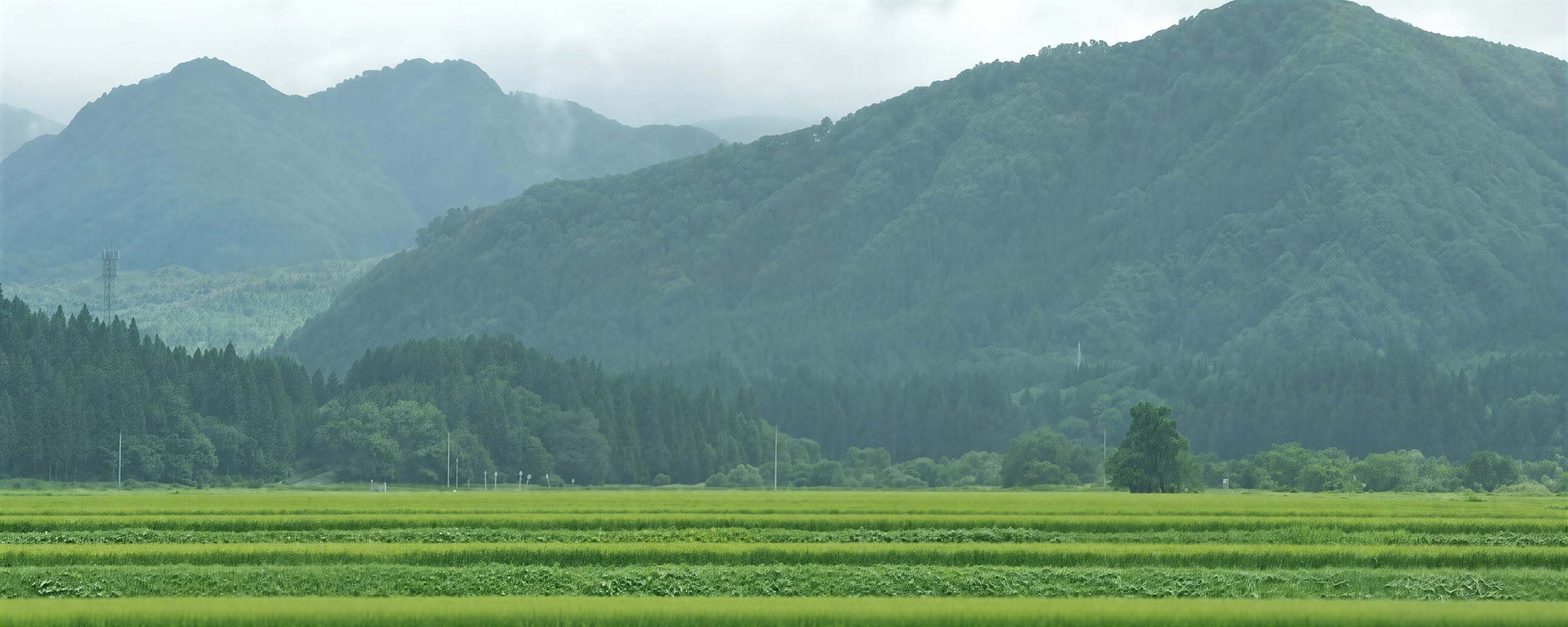
Our Kawatsura lacquerware is produced from a selection of Beech, Horse chestnut, Onoki and Hinoki woods sourced from the Ou mountain range in Northern Japan.

-
Kidori
First, in selecting our material, the stage we call Kidori, we avoid using any imperfect area and the knot of the wood and cut it into roughly sized blocks.
-
Arabiki
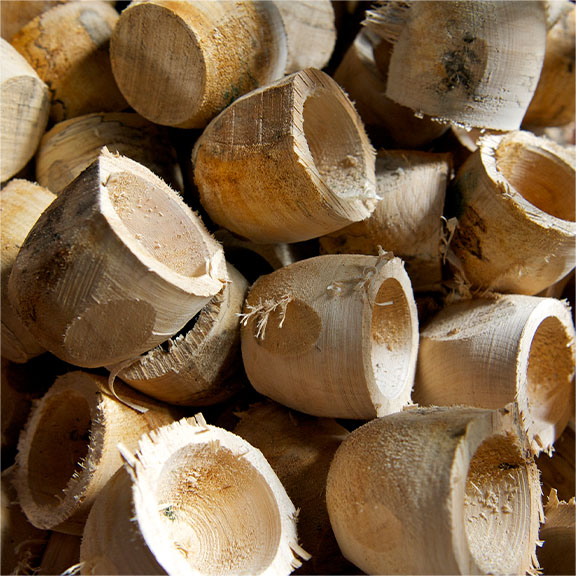
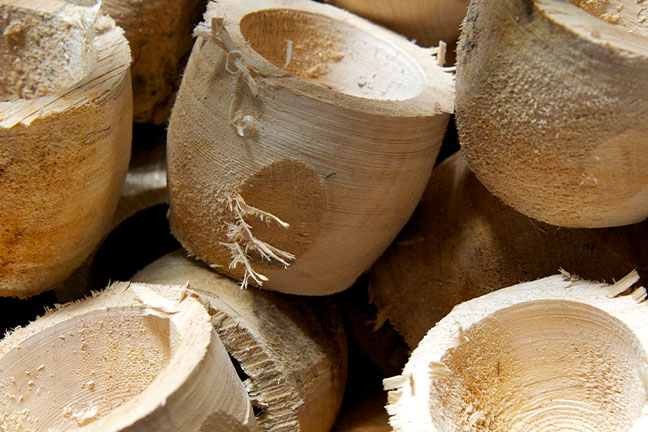
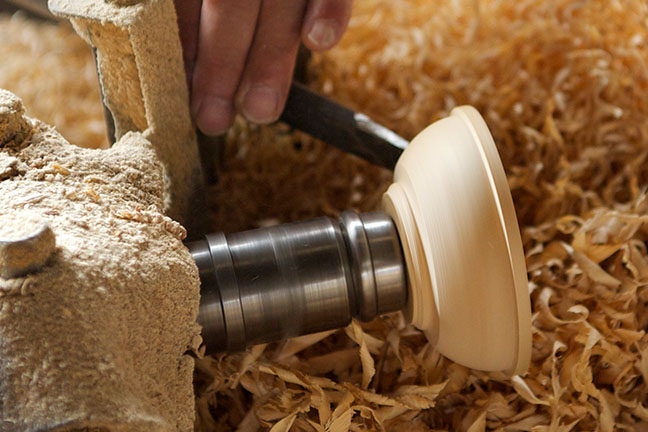
We then start to craft the ware, a stage called Arabiki, using a hand saw and turning lathe to create a rough basic shape.
-
Drying
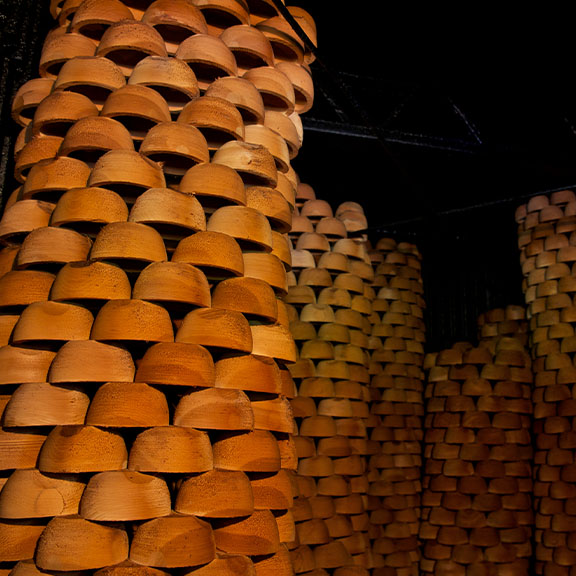
We let it air dry for a period of time before boiling it, to remove the astringent in the wood. We then dry smoke it for a period of one month.
-
Shiagebiki
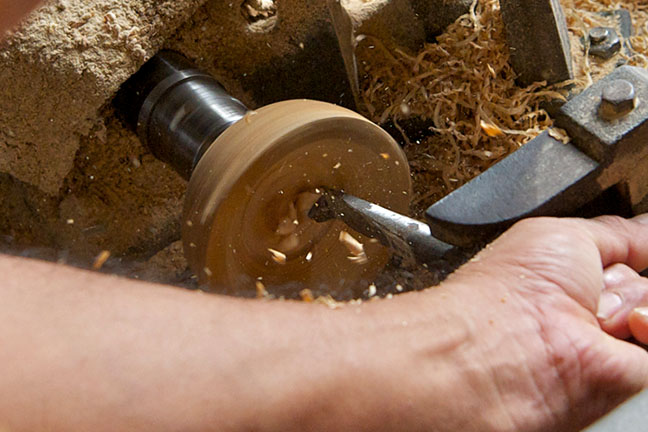
It is then ready for further manipulation, a stage called Shiagebiki. For our bowls, we attach the roughly carved wood to a wheel and whilst turning, we saw and plane into the desired bowl shape. After this process of carving and shaping and finishing we are ready to start the lacquering process.
The lacquering
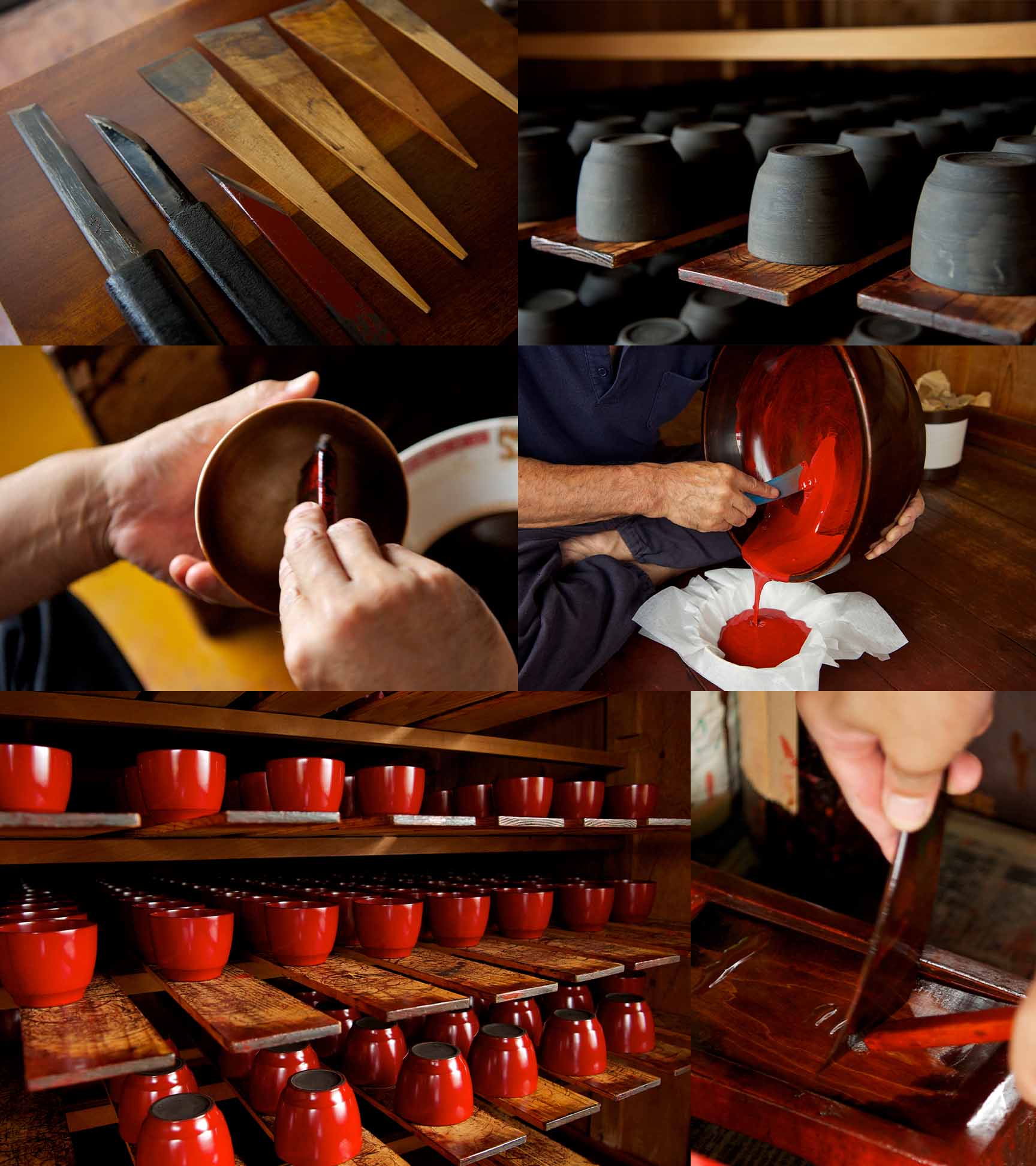
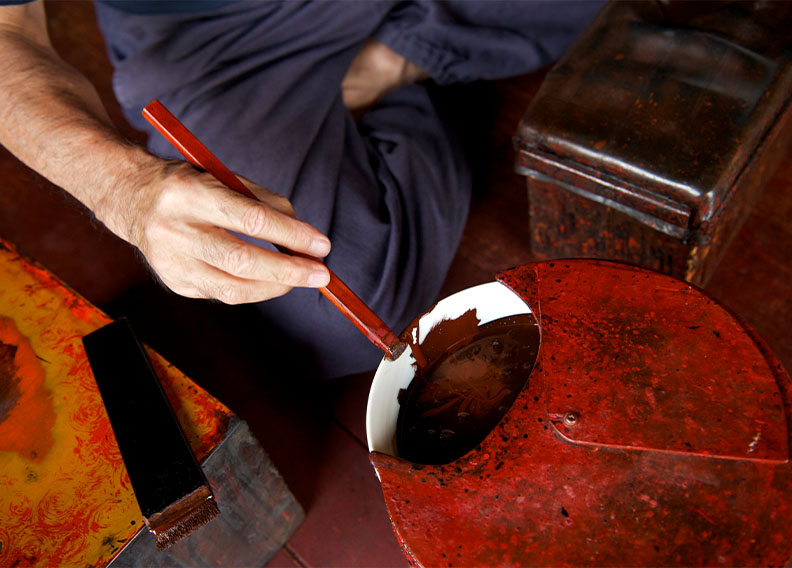
The process starts with coating of persimmon sap and raw lacquer creating the base work for many more layers of further lacquer. This groundwork coating is one of the three keys to the durability of our Kawatsura lacquerwares. Jujiro developed a technique of lacquering where each layer has a different mixture and character,(raw lacquer, lacquer with a touch of charcoal powder, rice glue, another layer of charcoal powder etc.) Multiple coatings are applied. This technique and the inherent resulting fine quality can only be found in Kawatsura lacquerware. The final product that hasbeen finished in many layers oflacquer creates a robustness that is the characteristics of Kawatsura lacquerware. We don’t add any layer of oil or other such products and strictly adhere to Jujiro’s technique. When combined with the skill of our craftsmen this results in an exquisite product witha smooth glossy finish. As craftsmen we are proud to show you what we can do by leaving no aberration in the lacquer nor any sign of brushwork. Our work takes time, but by adhering to these traditional methods ensures a product that not only can withstand everyday use but grow in beauty as it ages creating a special keepsake for both you and your family for generations.
-
Shibushitaji
At first the ware is coated with a basic layer of charcoal and then the sap from the persimmon tree gives it a layer of unrefined varnish.
-
Makijishitaji
We then coat the object with the first layer of lacquer; a mixture of raw lacquer and charcoal. After that, comes what we call the base layer, which is a layer of pure raw lacquer.
-
Honkataji
The next layer is lacquer is what we call the glue for the future layers of lacquer. This is applied as a thin layer using a cloth. Upon this we add multiple thin layers of different mixtures of lacquer, rice glue and tonoko clay.
-
Nakanuri・Uwanuri
With this process, the application and polishing over and over of the lacquer comes the skill of the craftsman for it takes a trained and practiced hand to paint the lacquer layer upon layer evenly and smoothly and to create a perfect color, free of the dust that comes with the process. The final layer of lacquer, so called Hananuri, requires a great depth of experience and skill to ensure no lines of the lacquer brush can be seen on the final product. Here the product can be complete if so desired.
Maki-e
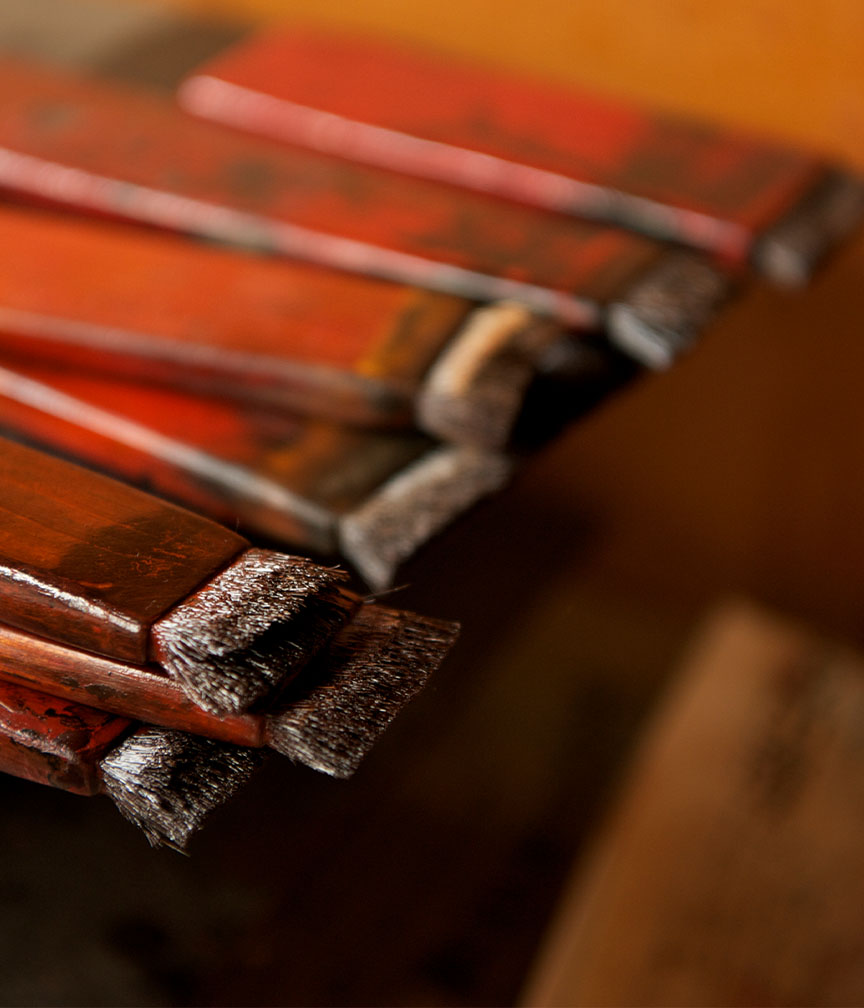
The traditional exquisite art of Maki-e is another form of decoration we can add to our lacquerware. The technique of Maki-e uses a special kind of brush to mark out the desired underlying fine design in raw lacquer and then gently a mix of metallic powders are layered with another brush within the lines and then left to harden.
We proceed in the order of okime, sitae(hiragai), konamaki(keuchi), konamaki.
Chinkin
Once the bowl has finished the process of lacquering there is the option of decorating the piece. The art of gold inlay can be performed on the finished bowl. First design is carved lightly onto the bowl. Once a design is fully completed the carved area is rubbed with raw lacquer, and then fine gold leaf is pressed onto the carved design. Beyond gold leaf we also can decoratebwith gold dust powder, vermillion red, blue or other colored powders. This art of inlay is particular to lacquerware and is something we are very skilled at in Kawatsura.
How to care for your lacquerware
Kawatsura lacquer-ware is an easy to care for robust tableware. If you fall in love with our product and use it with care then there is no complicated or special upkeep you need to worry about to keep your lacquerware in pristine condition. However we do advise that you follow these five pointers:
・ Please do not leave your lacquerware immersed in water for many hours after use.
・ For everyday washing, we advise using just tepid water.
・ To clean after containing more olly foods, use a regular
household detergent and soft sponge to wash your lacquerware
・ Please refrain from washing the lacquerware in a dishwasher with automatic dry function. Please also be aware that lacquerware is not suitable for use in microwave ovens.
・ Should your lacquerware incur any damage, it is possible to repair by a reapplication of lacquer.
The Utsuwa bowls
of Juiro
Lacquer is water resistant, will not absord arunciar additves, is a natural insecucide and nas instaung propertes. All denvered Trom nature.
As such our lacquer-ware is suitable for use by all, from both children to the elderly. It is a product you can trust and use for generations.
-
Feature 01
Yokogi-dori(Tangential cut)
To make our bowls we cut our wood along the grain. This creates a robust product that can well withstand pressure from the top rim to the base.
Because of our choice to cut in this way products are efficient in the utilization of natural resources and maintain sustainability.
-
Feature 02
Kunen kansou (Smoke drying)
Using the same wood for the fire, we smoke dry wood over a low heat for several hours. This serves two purposes:
・ The final product is able to be withstand stress and is protected against distortion from humidity.
・ The smoke when mixing with the natural proteins in the wood rigidifies the grain preventing decay and acts as a natural insecticide.